Pet Food Manufacturer - OEM/ODM & Private Label

Why Low-Temperature Baked Pet Food Is Winning Over Premium Buyers Worldwide
For decades, extrusion has been the default manufacturing process for dry dog and cat food. It’s fast, cost-efficient, and scalable — which is exactly why almost every mainstream kibble brand on the shelf today is made this way. But as pet owners in Europe, North America, and increasingly Southeast Asia grow more ingredient-conscious, a quieter alternative has been gaining serious traction with premium and mid-premium brands: low-temperature baked pet food.
For distributors evaluating their next private label or OEM opportunity, understanding why baked formulas command higher margins — and higher loyalty — is worth a closer look.
The Core Difference: Heat
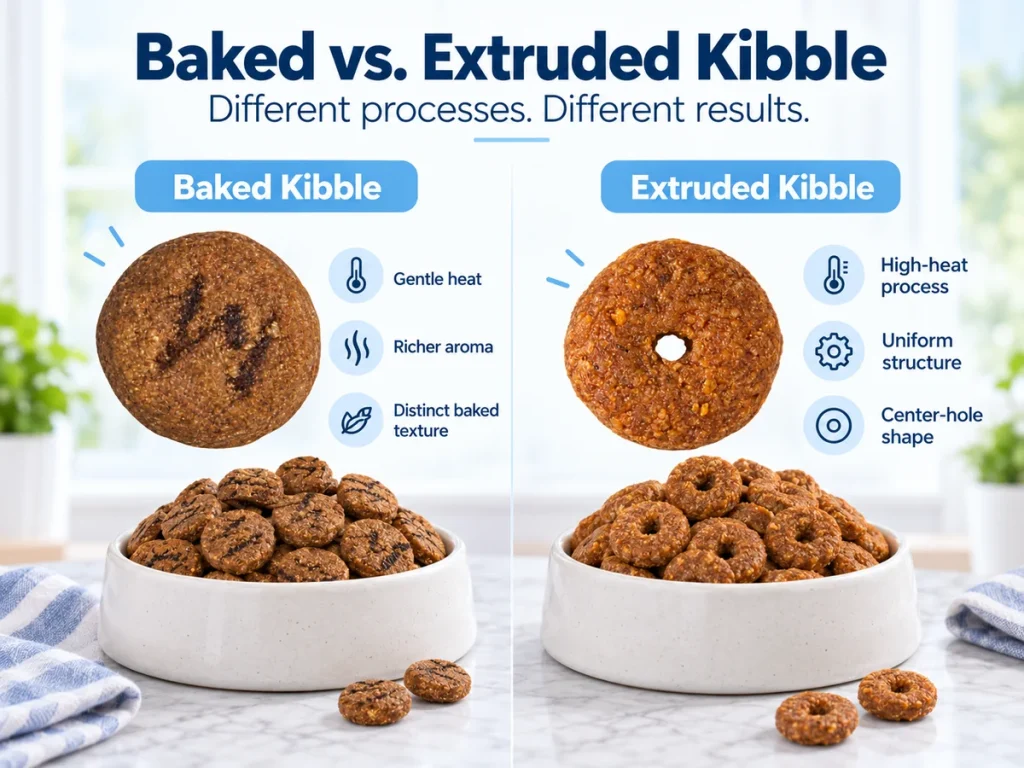
Traditional extrusion pushes a wet dough through a machine under intense pressure and temperatures that can reach 150–200°C (300–390°F) for a very short burst, then rapidly expands and dries it into the familiar kibble shape. It’s efficient, but that level of heat comes at a cost: heat-sensitive nutrients, natural amino acids, and the food’s original aroma and flavor compounds are partially degraded in the process. Manufacturers often compensate by spraying on flavor enhancers and synthetic palatants afterward.
Low-temperature baking works differently. Ingredients are baked slowly at roughly 100–120°C (212–248°F) over a longer period, similar in principle to baking bread rather than deep-frying. This gentler process:
- Preserves more of the original nutrient profile — vitamins, amino acids, and fatty acids that are sensitive to high heat survive the process in greater concentrations
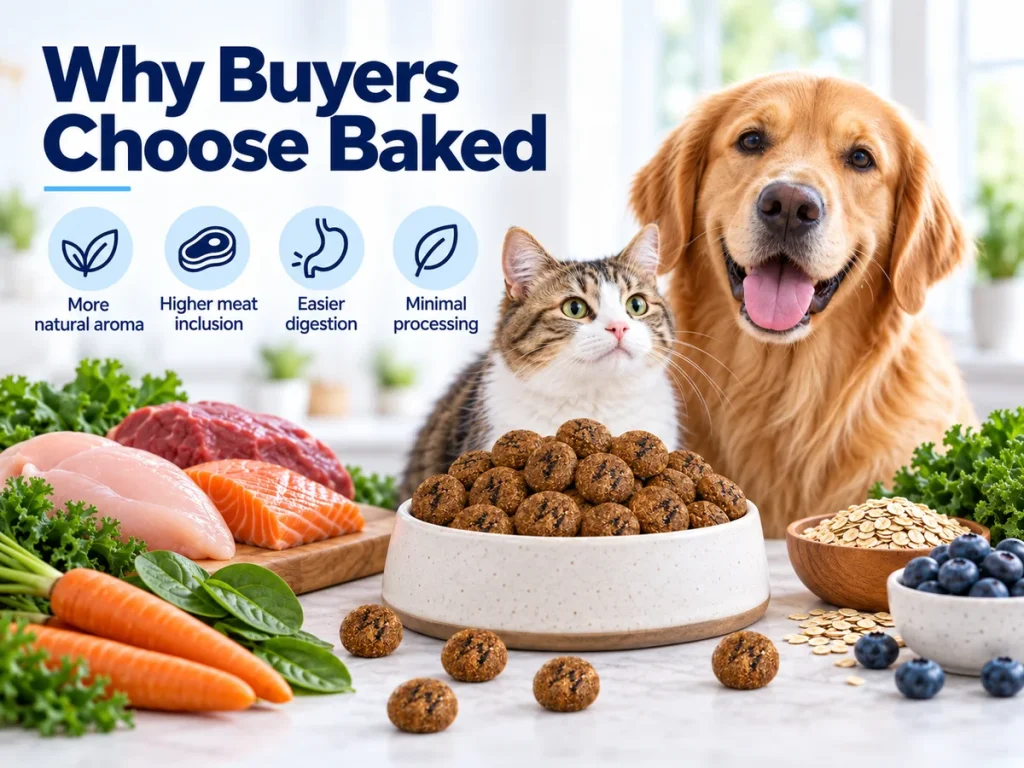
- Retains natural aroma and flavor — because the ingredients aren’t blasted with extreme heat, the food smells and tastes closer to real meat, without needing heavy palatant coatings
- Produces a lighter, more digestible texture — many baked kibbles are noticeably less dense than extruded kibble, which some formulations link to easier digestion and reduced digestive stress, particularly in sensitive dogs and cats
- Allows for higher meat inclusion rates — baking doesn’t require the same starch-to-moisture ratios that extrusion relies on for proper expansion, so formulas can lean more heavily on fresh and dehydrated meat as the top ingredients
What This Means for the End Consumer
Pet owners shopping in the premium aisle today are reading labels closely. They’re looking for:
- Fresh meat as the first ingredient, not meat meal or by-products
- Minimal processing and fewer synthetic additives
- Transparent, functional ingredients (added herbs, fruits, or prebiotics with a stated purpose — not filler)
Low-temperature baked formulas naturally check these boxes, which is why the category has become a recognizable differentiator on pet food packaging in markets like Germany, the UK, and the US — often marketed alongside terms like “gently baked,” “oven-baked,” or “slow-baked.”
Why This Matters for Distributors
From a commercial standpoint, baked pet food occupies a useful middle ground:
- Premium positioning without raw/freeze-dried pricing. Raw and freeze-dried diets command the highest margins but come with cold-chain logistics, shorter shelf life, and higher landed costs. Baked kibble ships and stores like standard dry food — no special handling — while still supporting a premium price point and story.
- Clear shelf differentiation. In a category crowded with visually similar bags of extruded kibble, “low-temperature baked” is an easy concept for a retailer or e-commerce listing to explain in one line, and for consumers to understand instantly.
- Flexible formulation for regional preferences. Because baking supports higher fresh-meat ratios, it’s well suited to markets where “high meat content” and “human-grade adjacent” claims resonate strongly with buyers.
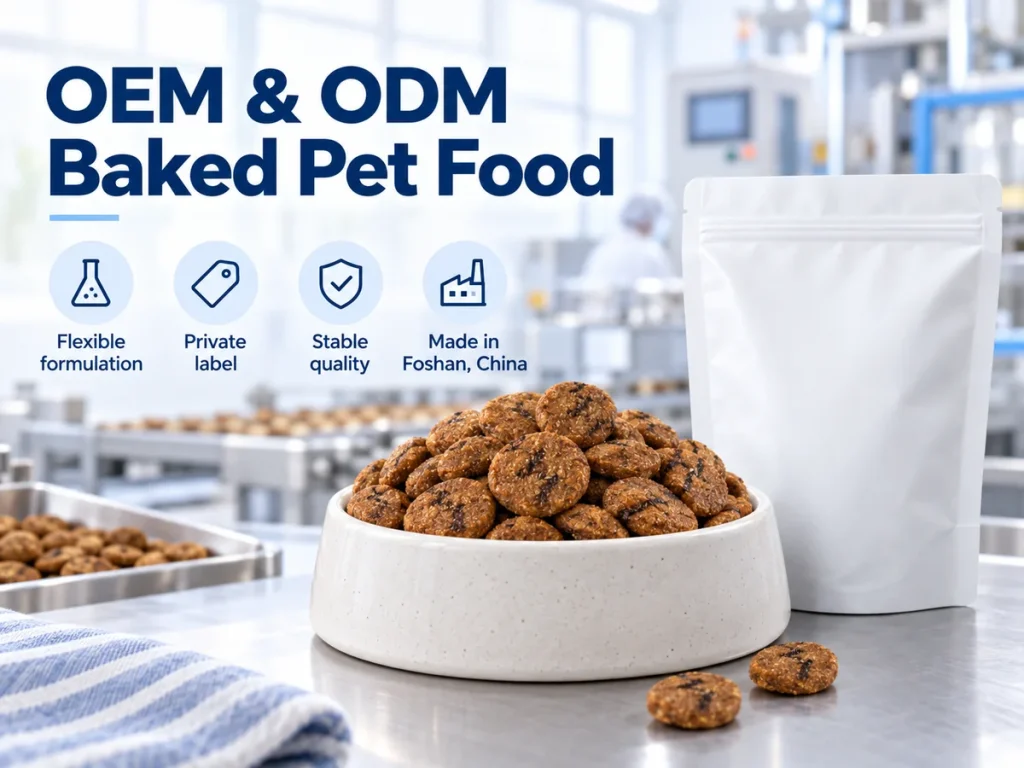
Sourcing Considerations
Not all baked pet food is created equal — factors like the specific bake temperature and time, the ratio of fresh-to-dehydrated protein, and whether functional ingredients (fish oil, prebiotics, herbal additions) are baked in or added post-process all affect the final product’s nutritional integrity and cost structure. When evaluating a manufacturing partner, it’s worth asking directly about:
- Actual baking temperature range and duration
- Total percentage of fresh + dehydrated meat versus meal or filler
- Whether the facility can support flexible private-label formulation (protein source, added functional ingredients, packaging format)
Wildbest, a brand of Hengsheng Pet Food, manufactures low-temperature baked dog and cat food in an ISO 22000, HACCP, FDA, BRC and EU export-certified facility in Foshan, China, and supports OEM/ODM formulation for distributor partners worldwide. To discuss a custom baked formula for your market, get in touch with our team.