Pet Food Manufacturer - OEM/ODM & Private Label

How to Choose a Pet Food Manufacturer: An OEM/ODM Buyer’s Checklist
A practical sourcing guide for pet food brands, importers, distributors, and private label businesses.
Finding a pet food manufacturer is relatively easy. Finding one that can consistently produce the product your brand needs is much harder.
A supplier may offer attractive samples, professional packaging designs, and a competitive quotation. Those are useful starting points, but they do not tell you everything about the factory behind the finished product.
Can the manufacturer maintain the same formula during bulk production? How are ingredients inspected? What happens if a batch fails a quality check? Does the supplier understand the requirements of your destination market?
These questions become especially important when you are launching a private label brand, expanding an existing product range, or changing manufacturing partners.
Choosing a pet food manufacturer is not simply about comparing prices. It is about understanding how the supplier develops, manufactures, tests, packages, and delivers your products.
This guide explains what to verify before selecting an OEM or ODM pet food manufacturer, including a practical checklist to help international buyers compare potential suppliers.
1. Define Your Product Requirements Before Contacting Manufacturers
Before asking factories for quotations, prepare a clear description of the product you want to manufacture.
A supplier cannot provide a meaningful proposal if the inquiry only says, “I want high-quality dog food.”
Different product categories require different production equipment, ingredients, manufacturing processes, and quality controls.
Start by identifying the basic requirements of your project.
| Requirement | Questions to consider |
|---|---|
| Product category | Extruded dry food, baked food, wet food, or treats? |
| Target animal | Dogs, cats, or another species? |
| Life stage | Puppy, kitten, adult, or another specified life stage? |
| Formula | Preferred protein sources, ingredient restrictions, nutritional objectives? |
| Market positioning | Mainstream, premium, or specialized product? |
| Packaging | Retail bag size, packaging material, and artwork requirements? |
| Destination | Which country or region will sell the finished product? |
| Order quantity | Expected first order and projected repeat orders? |
For example, an inquiry for chicken-based adult dog food in 2 kg retail bags, intended for the European market, gives a manufacturer a clearer starting point than a general request for premium pet food.
You do not need to finalize every ingredient before contacting a factory. However, you should know which product characteristics matter most to your brand.
This preparation also makes supplier quotations easier to compare because each factory is responding to approximately the same requirements.
2. Verify the Manufacturer’s Actual Production Capabilities
One of the first questions to ask a potential supplier is:
Where will my pet food actually be manufactured?
Some suppliers operate their own production facilities. Others work with contracted manufacturers or use a combination of in-house and outsourced processes.
Contract manufacturing is not necessarily a problem. The important point is understanding who performs each production stage and who is responsible for quality control.
What should you ask a pet food factory to provide?
Start with information that can help you understand the supplier’s operations:
- Registered company name and manufacturing address
- Actual photographs of production equipment and facilities
- Description of the manufacturing processes available
- Product categories produced at the facility
- Relevant certificates and their applicable scopes
- Quality inspection and batch traceability procedures
- Options for factory visits or supplier audits
A factory photograph alone is not proof of manufacturing capability. Ask the supplier to explain what the equipment does and how it relates to the product you intend to order.
For example, a mixing machine demonstrates one stage of production, but it does not establish whether extrusion, baking, drying, or packaging is performed at the same facility.
Hengsheng Pet Food’s manufacturing background
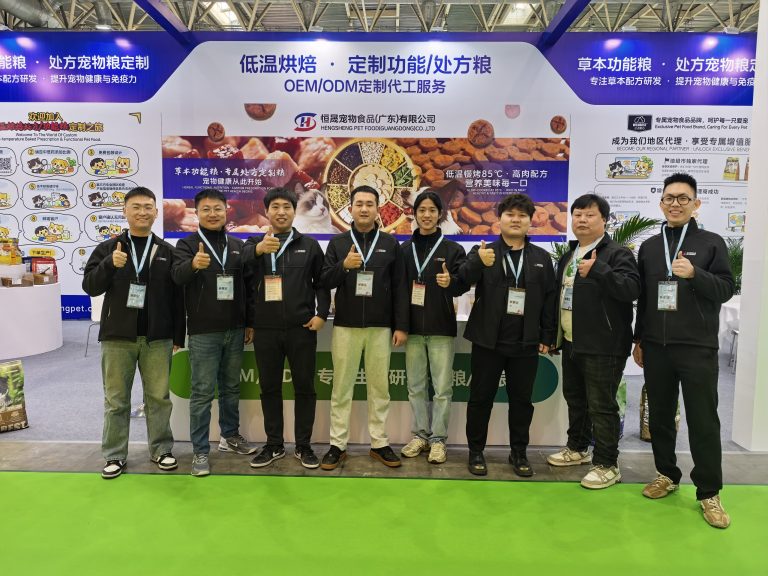
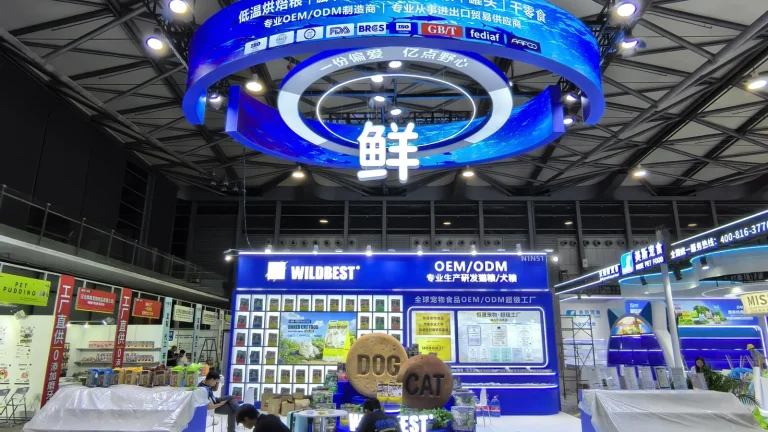
Hengsheng Pet Food (Guangdong) Co., Ltd. operates a manufacturing facility of approximately 5,000 m² in Foshan, Guangdong, China.
The company was established in November 2023 and provides pet food production and OEM/ODM services, with particular experience in low-temperature baked food and dry pet food manufacturing.
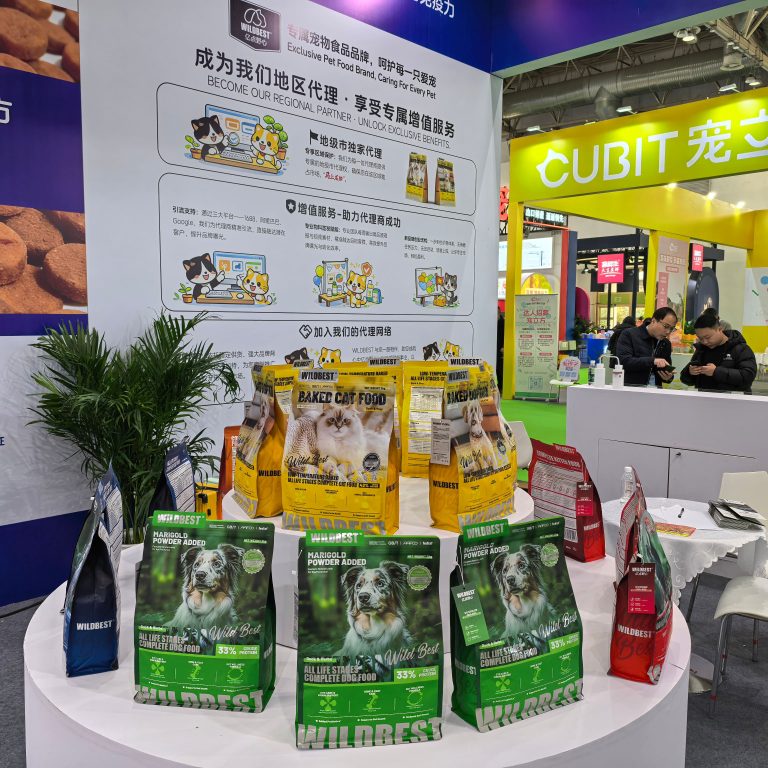
Buyers can review our company background and manufacturing facilities as part of their initial supplier evaluation.
For a specific project, it is still important to confirm the exact production arrangement, technical specifications, and applicable quality documentation before placing an order.
Buyer tip: Ask the manufacturer to explain which steps are performed in-house and whether any part of your proposed production process involves an external supplier.
3. Choose a Manufacturer With the Right Production Process
Pet food manufacturers are not interchangeable.
Different production methods affect product structure, texture, manufacturing requirements, and the types of formulations that can be produced.
For dry pet food brands, extrusion and baking are two important processes to understand.
Extruded pet food manufacturing
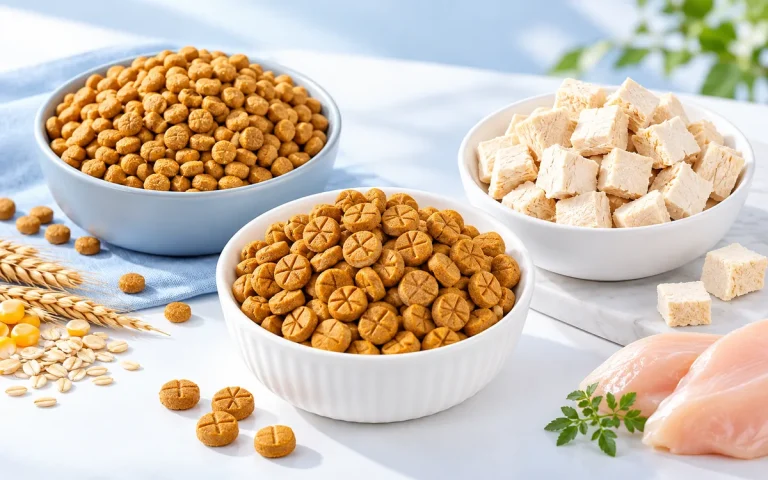
Extrusion is widely used to manufacture commercial dry dog and cat food.
During production, prepared ingredients pass through an extrusion system where heat, moisture, pressure, and mechanical energy help form the product.
The process is followed by additional stages such as drying, coating, cooling, and packaging, depending on the specific production line.
When sourcing extruded food, ask about:
- Available kibble sizes and shapes
- Formula compatibility with the production process
- Moisture and density specifications
- Coating and finishing requirements
- Quality checks applied to finished kibble
- Minimum production quantity
For a practical product reference, buyers can review Hengsheng’s OEM extruded adult dog food manufacturing options.
Product specifications should be confirmed individually rather than assuming that every recipe can use the same manufacturing conditions.
Low-temperature baked pet food manufacturing
Baked pet food uses a different processing method and may produce a denser structure than conventional extruded kibble.
It can be considered by brands looking for specific product textures, ingredient combinations, or premium dry-food positioning.
However, the term low-temperature baked does not automatically establish better digestibility, superior nutritional quality, or greater nutrient retention.
The actual result depends on the formulation, processing conditions, and finished-product evaluation.
Ask the manufacturer about the baking conditions, moisture targets, product structure, nutrient specifications, and appropriate testing.
Our guide to low-temperature baked pet food and its differences from extrusion explains the manufacturing considerations in greater detail.
What about wet food and treats?
Wet food, freeze-dried products, and other treats may involve different equipment, safety controls, and packaging requirements.
A factory that manufactures dry kibble does not automatically have the ability to manufacture every other pet food category in-house.
If you are sourcing multiple product types, ask whether they are produced at the same facility or through separate manufacturing arrangements.
The right manufacturing partner is not necessarily the one with the longest product catalog. It is the one that can demonstrate relevant capabilities for the products you actually need.
4. Understand the Difference Between OEM and ODM Pet Food Manufacturing
OEM and ODM are commonly used in pet food sourcing, but their meanings can vary between suppliers.
OEM pet food manufacturing
OEM, or Original Equipment Manufacturing, generally involves producing a product according to specifications agreed with the customer.
The buyer may already have a formula or may approve a proposed formulation before manufacturing begins.
The agreement should clearly define the finished product’s nutritional specifications, physical characteristics, packaging, and quality requirements.
ODM pet food manufacturing
ODM, or Original Design Manufacturing, typically includes additional product development support.
This may involve ingredient selection, formula development, product characteristics, sample preparation, or packaging suggestions.
ODM can be useful for brands without an established in-house formulation team.
However, buyers should not assume that all ODM services include the same development work.
Questions to clarify before starting development
Before approving a project, establish:
- Who develops and approves the final formula?
- Who owns the formula and related intellectual property?
- Can the manufacturer change ingredients without written permission?
- Are development and testing fees charged separately?
- What happens if the first sample does not meet the agreed requirements?
- Which product characteristics must remain unchanged during bulk production?
These terms should be recorded in the relevant development agreement, product specification, or manufacturing contract.
A clear agreement is more useful than relying only on a supplier’s description of its OEM or ODM services.
5. Evaluate Formulation and Nutritional Expertise
A good ingredient list is not enough to establish that a pet food formula is nutritionally suitable.
The intended animal species, life stage, nutritional purpose, ingredient composition, and processing method all matter.
For example, a complete cat food requires a different nutritional assessment from an adult dog food or a complementary pet treat.
Ask who is responsible for formulation development and what experience or qualifications support the work.
A capable manufacturing partner should be able to discuss how nutritional targets are established and how the finished product will be evaluated.
Complete pet food versus complementary products
Before reviewing a formula, establish whether the product is intended to be:
- A complete daily diet
- A complementary food
- A snack or treat
- Another specifically defined product type
The classification affects nutritional expectations and may influence labeling requirements.
For US-market products, the AAFCO pet food labeling guidance explains nutritional adequacy statements and related labeling principles.
For European formulation, the FEDIAF Nutritional Guidelines provide a widely used reference for complete and complementary cat and dog food.
These references are useful for product development, but neither should be presented as proof that a particular product has received regulatory approval.
Questions buyers should ask
Request clarification on:
- Nutritional targets for the intended species and life stage
- Basis for the formula’s nutritional adequacy
- Finished-product nutrient specifications
- Ingredient restrictions and substitution procedures
- Testing or other evidence supporting product claims
- Responsibilities for reviewing market-specific requirements
Be cautious of broad claims such as “100% nutritionally superior” or “suitable for every pet” without appropriate supporting evidence.
A reliable supplier should explain both what a formulation is designed to achieve and what still needs to be verified.
6. Examine the Factory’s Food Safety and Quality Control System
Every manufacturer can claim to care about quality.
For buyers, the more useful question is how that quality is controlled and documented.
A pet food factory should be able to explain its procedures for incoming materials, production, finished-product inspection, traceability, and handling products that do not meet specification.
Raw material inspection
Ask how ingredients are selected, identified, received, and stored.
The appropriate checks may differ depending on the ingredient and identified risks.
For example, animal-derived ingredients, oils, and dry powdered materials do not necessarily require identical handling and testing arrangements.
The manufacturer should be able to explain the controls relevant to your product.
Production process controls
During manufacturing, important parameters must be managed according to the process and product.
These may include mixing conditions, processing temperature, moisture, sanitation, and prevention of unintended product contamination.
Ask how critical operating conditions are monitored and what happens when a production result falls outside the specified range.
Finished-product testing
Before shipment, the manufacturer and buyer should agree on the appropriate finished-product specifications and acceptance criteria.
Depending on the product, these may include:
- Moisture and other relevant physical parameters
- Nutritional analysis
- Applicable microbiological criteria
- Relevant chemical or contaminant testing
- Packaging integrity
- Appearance and product consistency
Not every test is necessarily performed on every batch. The actual testing plan should reflect the product, identified risks, customer requirements, and applicable regulations.
Where appropriate, ask whether batch-specific Certificates of Analysis (COAs) or third-party reports can be supplied.
Batch traceability
Traceability helps a manufacturer connect finished products to the ingredients and production records associated with them.
Ask how batch numbers are assigned and how the factory would investigate a customer complaint.
A useful question is:
If a finished batch does not meet the agreed specification, who makes the release decision and what corrective action follows?
The answer can reveal more about the manufacturer’s operating procedures than a general promise of quality.
For additional regulatory context, the US FDA’s Preventive Controls for Animal Food rule describes requirements for covered facilities, including hazard analysis and preventive controls.
Buyer tip: Ask for a sample product specification, an explanation of available test reports, and a description of the factory’s traceability process.
7. Verify Certifications, Registration Documents, and Regulatory Requirements
Certificates are useful during supplier qualification, but only when buyers understand what they represent.
A quality management certificate is not the same as a food safety management certificate. Neither automatically proves that every finished product is approved for import into a particular country.
When reviewing a manufacturer’s credentials, check:
- Registered company name
- Manufacturing site address
- Applicable standard or certification scheme
- Product or operational scope
- Issue and expiration dates
- Issuing organization
- Current validity, where independent verification is available
The document should correspond to the legal entity and manufacturing activity relevant to your order.
Hengsheng Pet Food’s existing certification documents
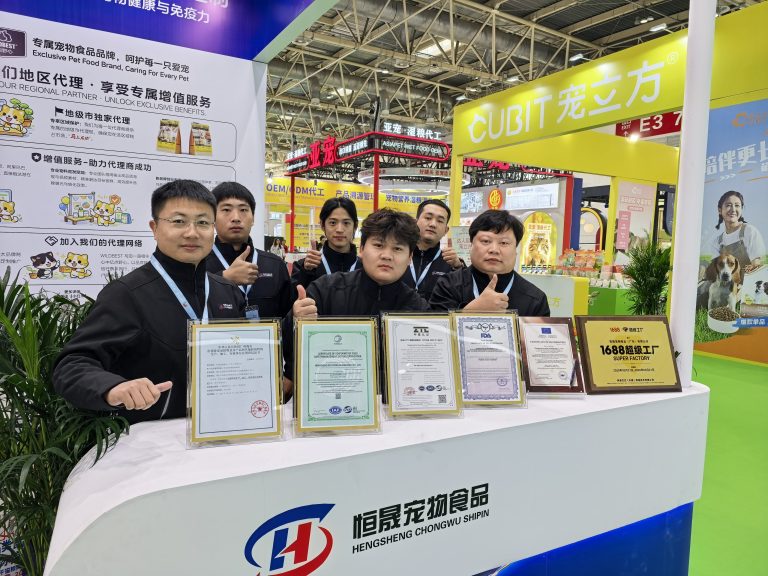
Hengsheng Pet Food (Guangdong) Co., Ltd. maintains the following management system certification documents for buyer review.
ISO 9001:2015 — Quality Management System
Our ISO 9001 certificate covers the production of solid pet compound feed within the scope specified in the certificate.
The document records an initial issue date of May 26, 2025, and an expiration date of May 25, 2028.
ISO 9001 concerns quality management systems. It should not be interpreted as product approval for a particular overseas market.
ISO 22000:2018 — Food Safety Management System
Our ISO 22000 certificate addresses the food safety management system for the production activities specified in the certificate, including solid pet compound feed.
The certificate records an issue date of May 27, 2025, and an expiration date of May 26, 2028.
ISO 22000 provides a management system framework for food safety. Its certification scope should be reviewed separately from product-specific test results and import requirements.
Product-specific SUCI documentation
Hengsheng also holds a SUCI product certificate issued by the Islamic Food Research Centre (Hong Kong).
The document lists four specifically identified cat food products and records a validity period from April 30, 2026, to April 29, 2029.
This is product-specific documentation. It should not be interpreted as certification of every formula, every product category, or all private label products manufactured by the company.
Buyers requiring religious or market-specific product certification should confirm whether the proposed formulation and production arrangement fall within an applicable certificate’s scope.
FDA registration and US market requirements
For buyers planning to sell pet food in the United States, FDA facility registration and product compliance are separate matters.
Certain food facilities must register with the FDA, unless an exemption applies. However, facility registration does not mean that the FDA has approved the factory’s products.
The FDA does not issue or recognize privately produced food facility registration certificates as proof of official registration.
Where FDA registration is applicable, buyers should request suitable current registration evidence rather than treating a third-party document as FDA approval.
The FDA explains this distinction in its food facility registration guidance.
Other applicable US requirements, including animal food safety, ingredients, labeling, and import procedures, must also be reviewed.
European market and import eligibility
For products intended for the European Union, a certificate displaying EU-related terminology should not automatically be treated as unrestricted import authorization.
The relevant requirements depend on the product category, ingredients, processing arrangements, destination, and applicable import rules.
For products involving animal by-products, establishment eligibility and official listing requirements may be particularly important.
The European Commission provides information about authorized establishments in non-EU countries.
Before ordering EU-bound products, the importer and manufacturer should confirm the applicable requirements using current official information.
Buyer tip: Never assume that a factory certificate automatically covers every recipe, packaging format, production process, or export destination.
8. Confirm That Mass Production Can Match the Approved Sample
Samples are an important part of OEM and ODM development.
They allow buyers to evaluate appearance, texture, packaging concepts, and other product characteristics before committing to commercial production.
However, sample approval alone does not guarantee that the bulk product will be identical.
Production conditions, ingredient sourcing, batch size, and packaging arrangements may differ between development and manufacturing.
Create an agreed product specification
Before mass production, define the characteristics that must be controlled.
For dry pet food, these may include:
- Approved formula and ingredient specifications
- Intended nutritional profile
- Kibble size, shape, and appearance
- Moisture and other physical parameters
- Relevant test requirements and acceptance limits
- Packaging materials and dimensions
- Label artwork and print approval
- Shelf-life and storage requirements
The appropriate limits and methods should be agreed for the specific product.
Establish a change-control process
Ask what happens if an ingredient becomes unavailable or a packaging material must be changed.
Will the manufacturer request approval before making the substitution?
Does the change require additional evaluation?
How will the revised specification be recorded?
These questions are particularly important when the finished product will be sold under your brand.
Buyer tip: Approve the commercial product against written specifications, not only photographs or informal descriptions.
9. Compare MOQ, Pricing, and Total Sourcing Costs
Minimum order quantity is a practical consideration for new brands and importers.
It affects purchasing commitments, packaging costs, inventory exposure, and the economics of repeat orders.
However, a lower MOQ does not always mean a better overall sourcing arrangement.
A smaller order may reduce initial inventory risk while increasing the unit manufacturing cost.
A larger order may offer a lower unit price but require more cash, storage space, and time to sell through.
Hengsheng Pet Food’s standard production MOQs
Our current standard production starting quantities are:
| Product category | Standard MOQ |
|---|---|
| Extruded pet food | 3,000 kg (3 metric tons) |
| Low-temperature baked pet food | 1,000 kg (1 metric ton) |
| Pet treats | 300 kg |
These figures are standard production quantities, subject to the formulation, packaging, and specific project requirements.
Other formats, including wet pet food, should be quoted separately.
The applicable minimum for each formula, flavor, or packaging design must also be confirmed. Different recipes cannot automatically be combined into one production MOQ.
For a detailed explanation of production quantities and quotation considerations, read our private label pet food MOQ and manufacturing cost guide.
What should a manufacturing quotation include?
Ask the supplier to clarify the following cost components:
| Cost item | What to confirm |
|---|---|
| Ingredients | Protein source, formula specifications, specialty materials |
| Development | Sampling, formula adjustments, additional evaluations |
| Production | Batch size, manufacturing process, finishing requirements |
| Quality control | Included testing and separately charged reports |
| Packaging | Material, printing, bag size, carton configuration |
| Logistics | Incoterms, loading point, transportation arrangements |
| Commercial terms | Payment milestones and any additional charges |
Do not compare an EXW quotation with a delivered-price quotation without accounting for the different responsibilities and costs.
For the first commercial order, total project cost is usually a more useful comparison than price per kilogram alone.
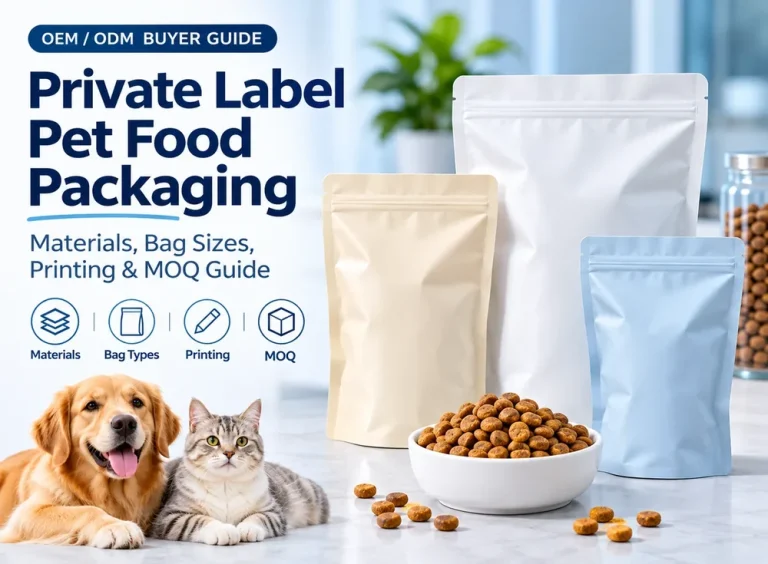
10. Review Packaging and Labeling Capabilities
Packaging is often treated as a final design decision. In reality, it should be discussed much earlier.
The intended packaging format can affect material purchasing, production compatibility, cost, and minimum order quantities.
Ask the manufacturer about available packaging materials, sizes, barrier properties, printing methods, and sealing requirements.
If you need several retail sizes or different artwork for multiple markets, clarify whether each variation has a separate packaging minimum.
Packaging specifications to confirm
Before approving artwork, discuss:
- Primary packaging material and structure
- Finished bag size and net weight
- Moisture and oxygen barrier requirements where applicable
- Sealing performance
- Print colors and artwork specifications
- Carton quantity and shipping configuration
- Packaging procurement and delivery schedule
A manufacturer may be able to produce a particular formula while requiring additional time or cost for custom packaging.
Who checks the product label?
Labeling responsibilities should be agreed before printing.
The manufacturer may provide product specifications and technical information, while the brand owner or importer may be responsible for market-specific label approval.
For example, different markets can have different requirements for ingredient declarations, nutritional statements, feeding instructions, and identification of responsible businesses.
Claims such as hypoallergenic, supports joint health, or high protein should be reviewed for evidence and regulatory suitability.
A professional-looking package is not necessarily a compliant one.
Buyer tip: Confirm the formula, product classification, destination market, and label approval responsibilities before ordering printed packaging.
11. Evaluate Lead Times, Communication, and Export Readiness
Even when a factory has suitable manufacturing capabilities, poor project coordination can cause delays and unnecessary costs.
Ask who will be responsible for managing your order and how progress will be communicated.
A realistic OEM/ODM project usually involves several stages:
- Product requirement review
- Initial quotation and feasibility assessment
- Formula discussion and sample preparation
- Sample testing and approval
- Packaging confirmation and procurement
- Production scheduling
- Manufacturing and quality checks
- Shipment preparation
These stages may overlap depending on the project, but the manufacturer should be able to explain the main dependencies.
Clarify when the production lead time begins
Does the quoted production period start when the deposit is received?
Does it start after the formula and packaging artwork have been approved?
Are special ingredients or printed packaging materials already available?
Without this information, a lead-time promise may be difficult to interpret.
Confirm export responsibilities
For international orders, clarify the agreed Incoterms, shipment destination, shipping documents, inspection arrangements, and responsibilities for import clearance.
Product-specific veterinary or regulatory documentation may be necessary depending on the market.
Ask the supplier to explain which documents it can provide and which requirements remain the importer’s responsibility.
For a broader introduction to the sourcing relationship, our private label pet food manufacturing overview outlines the main OEM/ODM service considerations.
A manufacturer that communicates limitations clearly may be a better partner than one that promises every specification, quantity, and delivery date without reviewing the project.
Pet Food Manufacturer Evaluation Checklist
Use this checklist to compare suppliers before selecting a manufacturing partner.
| Evaluation area | Key question | Evidence to request |
|---|---|---|
| Factory identity | Who actually manufactures the product? | Company registration, production site details |
| Production capability | Is the required manufacturing process available? | Relevant equipment and process information |
| Product experience | Has the factory worked with similar product formats? | Product specifications and relevant examples |
| Formulation | Who develops and approves the recipe? | Formulation process and technical documentation |
| Nutrition | How is nutritional suitability established? | Agreed nutritional specifications and supporting evidence |
| Quality control | How are materials and finished products checked? | Inspection procedures and relevant reports |
| Certification | What is the actual scope of each certificate? | Current certificates and verification information |
| Traceability | Can ingredients be linked to finished batches? | Traceability procedures and example records |
| Sampling | How is the approved sample controlled? | Written product specification |
| MOQ | Does the minimum apply to each formula or SKU? | Itemized quantity requirements |
| Packaging | Can the intended format be manufactured? | Packaging specifications and quotations |
| Export | Can the required documentation be supported? | Relevant shipping and compliance documentation |
| Communication | Who manages changes and quality concerns? | Defined contacts and approval procedures |
| Commercial terms | What is included in the quoted price? | Detailed quotation and contract terms |
Not every document will necessarily be available during an initial inquiry. Some technical or commercial records may be confidential.
However, the manufacturer should be able to explain its procedures and identify which supporting documents can be reviewed during supplier qualification.
Warning Signs When Choosing a Pet Food Manufacturer
Not every sourcing risk is obvious from a quotation.
Pay closer attention when a supplier:
- Cannot explain where the product is manufactured
- Advertises a certificate but cannot clarify its scope
- Describes FDA registration as FDA product approval
- Makes nutritional claims without supporting evidence
- Cannot provide an agreed product specification
- Gives the same MOQ for every formula without reviewing production requirements
- Changes ingredients or packaging without approval
- Avoids explaining how nonconforming batches are handled
- Provides a low price but cannot identify what is included
- Promises export eligibility without reviewing the destination market
One incomplete response does not automatically mean a supplier is unsuitable. Technical questions can require input from several departments.
The important issue is whether the manufacturer eventually provides clear, consistent, and verifiable information.
What Information Should You Send When Requesting a Quotation?
A well-prepared inquiry helps both the buyer and the manufacturer.
If you are comparing several factories, use one consistent product brief so the quotations are based on similar requirements.
Here is a practical example.
| Item | Example requirement |
|---|---|
| Product | Extruded dry dog food |
| Intended animal | Adult dogs |
| Formula preference | Chicken-based formula |
| Nutritional purpose | Complete food |
| Destination market | European Union |
| Retail packaging | 2 kg custom-printed bags |
| First order | 3,000 kg |
| Number of formulas | One initial formula |
| Development | Sample evaluation before mass production |
| Documentation | Applicable product and quality documents |
| Delivery | Preferred shipping terms and destination |
If some requirements are not yet finalized, identify them clearly.
A manufacturer can then explain which decisions affect technical feasibility, MOQ, cost, or delivery.
The result is usually a more useful discussion than asking several suppliers for their “best price” without a defined product.
Why Consider Hengsheng Pet Food for OEM/ODM Manufacturing?
Hengsheng Pet Food (Guangdong) Co., Ltd. is a pet food manufacturing business located in Foshan, Guangdong, China.
Our approximately 5,000 m² facility supports pet food production and OEM/ODM projects for brand owners, importers, and distributors.
Our product discussions cover extruded dry food, low-temperature baked pet food, treats, and other relevant pet food categories, subject to the specific manufacturing arrangements.
For buyers evaluating our factory, existing documentation includes ISO 9001:2015 and ISO 22000:2018 management system certificates covering the activities stated in their respective scopes.
We can also discuss relevant product-specific documentation, including the SUCI certificate for the four cat food products listed in that document.
These documents should be reviewed according to their actual scope and validity. Market-specific import eligibility and regulatory requirements must be evaluated separately for each project.
Our current standard production MOQs are:
- Extruded pet food: 3,000 kg
- Low-temperature baked pet food: 1,000 kg
- Pet treats: 300 kg
Final quantities and other requirements depend on the proposed formula, product specifications, packaging, and manufacturing arrangements.
We encourage overseas buyers to provide a clear product brief and ask detailed questions about formula development, manufacturing, quality documentation, packaging, and order planning.
A good manufacturing partnership starts with realistic expectations and specifications that both parties understand.
Frequently Asked Questions About Choosing a Pet Food Manufacturer
How do I choose a reliable pet food manufacturer?
Look for a manufacturer with relevant production capabilities, clear product specifications, suitable quality controls, and appropriate documentation. Verify the factory’s identity, certificate scopes, manufacturing arrangements, MOQ, and communication procedures before placing an order.
What is the difference between an OEM and an ODM pet food manufacturer?
OEM generally refers to manufacturing according to an agreed customer specification. ODM usually includes more product development support. The exact services and ownership arrangements should be confirmed in writing because suppliers may use these terms differently.
What certifications should I look for in a pet food factory?
Relevant management system certifications may include ISO 9001 and ISO 22000, among others. What matters is whether a certificate is valid and covers the specific company, location, and activities relevant to your product. Certifications do not replace product testing or market-specific regulatory compliance.
Is an FDA-registered pet food manufacturer automatically approved to sell in the United States?
No. FDA food facility registration is not FDA product approval. Applicable product, ingredient, labeling, food safety, and import requirements still need to be assessed.
Can a pet food manufacturer develop a custom formula?
Some OEM/ODM manufacturers provide formulation development support. Buyers should confirm technical feasibility, development responsibilities, nutritional objectives, sample evaluation, ownership of the formula, and any additional charges.
What is the minimum order quantity for private label pet food?
It depends on the manufacturer and production process. Hengsheng Pet Food’s current standard MOQs are 3,000 kg for extruded pet food, 1,000 kg for low-temperature baked pet food, and 300 kg for pet treats. Project-specific requirements must be confirmed.
How can I make sure bulk production matches my sample?
Use a written product specification with agreed acceptance criteria. Confirm the sample approval process, relevant testing, packaging requirements, and how any production changes will be managed.
Should I choose the manufacturer offering the lowest price?
Not necessarily. Compare manufacturing capability, specifications, quality controls, MOQ, packaging, testing, logistics, and total order costs. A low unit price may not represent the best overall purchasing decision.
Conclusion: Choose a Manufacturer You Can Verify
Selecting a pet food manufacturer is one of the most important decisions a private label brand will make.
An attractive sample and a competitive price are useful, but they are only part of the evaluation.
The manufacturer should also be able to explain how your product will be formulated, produced, inspected, packaged, and delivered.
Review the factory’s actual capabilities. Check certification scopes rather than relying on certificate names. Confirm the product specification before mass production, and make sure the proposed order quantity fits your business.
These steps will not eliminate every sourcing risk, but they can help you make better-informed decisions and establish clearer expectations with your manufacturing partner.
Discuss Your OEM/ODM Pet Food Project With Hengsheng
Are you developing a private label pet food brand, planning a new product line, or evaluating a manufacturing partner?
Contact Hengsheng Pet Food with your preferred product category, formula requirements, target market, packaging specifications, and expected order quantity.
Our team can review your project requirements and discuss the next steps.
Hengsheng Pet Food (Guangdong) Co., Ltd.
Telephone: +86-15322270596
WhatsApp: +86-182-3011-9927
Email: info@hengshengpet.com
Website: https://hengshengpet.com/